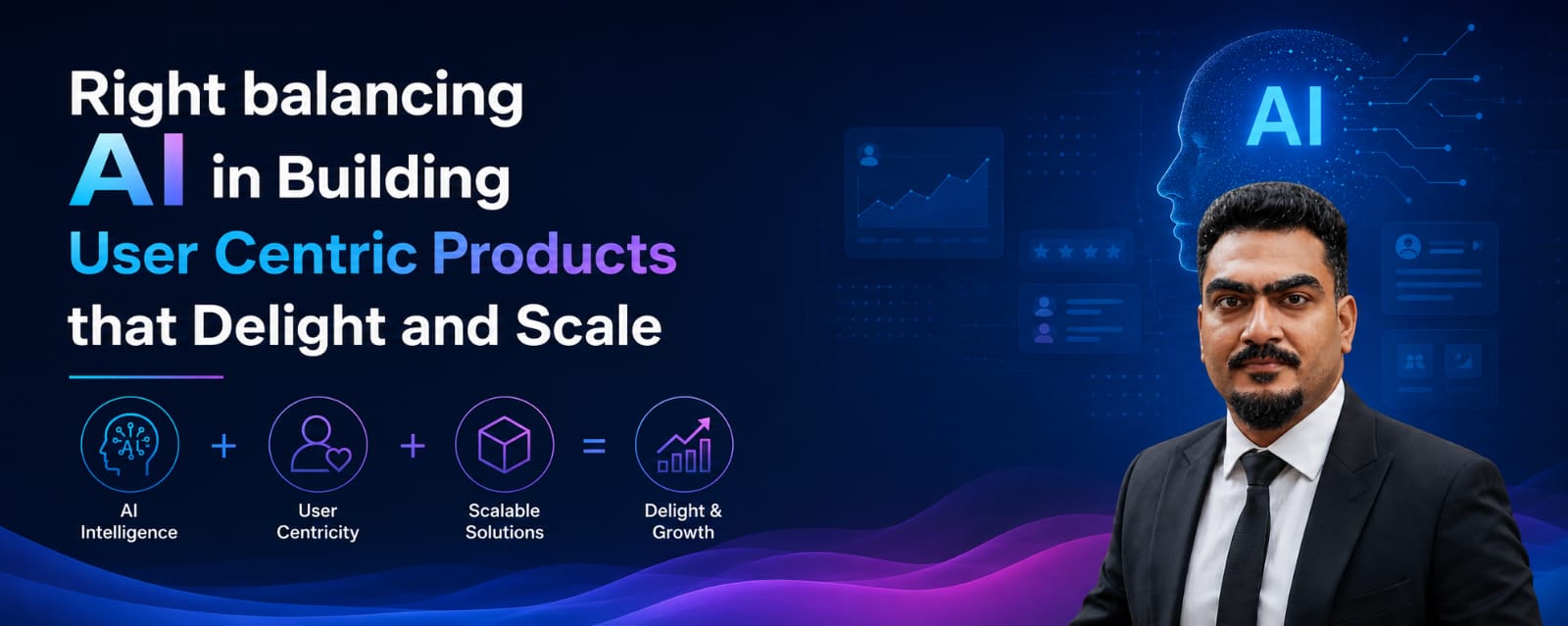
Integrating AI into product ecosystems frequently triggers an over-engineering trap: deploying non-deterministic, high-latency models where lean, deterministic software excels. True product-led scale—anchored by recurring revenue, repeat transactions, high customer lifetime value, and platform reliability—demands a calibrated hybrid architecture. Winning products do not expose raw AI complexity; they orchestrate intelligence invisibly to accelerate user intent and remove friction.
The Adaptive Agency Framework (AAF)
To bridge intuitive user experience with enterprise-grade infrastructure, product and engineering leaders must implement a tiered model of interaction and compute:
Autonomous Invisible Workflows (Deterministic-Led): High-confidence backend operations run silently without UI bloat. In enterprise B2B, this automates predictive ledger reconciliation and supply-chain anomaly detection, preserving platform robustness and shielding revenue from operational leakage.
Contextual Co-Piloting (Probabilistic Assist): Surface anticipatory intelligence to eliminate decision fatigue. In consumer B2C, this drives repeat sales via dynamic cart replenishment, context-aware reordering, and intent-driven personalization.
Governed Fallback Guardrails (Zero-Fail Safety): Dynamic confidence-scoring gateways route edge cases to deterministic rule engines or human-in-the-loop validation whenever model drift, hallucination risk, or latency thresholds are breached.
High-Throughput Architectural Realities
Balancing platform robustness with delight requires strict adherence to system latency and compute unit economics:
B2C Conversion Engines (Sub-50ms Latency): Modern commerce and content platforms pair vector embeddings with deterministic ranking heuristics. By caching intent semantically and deploying fine-tuned Small Language Models (SLMs) at the edge, systems maximize transaction frequency without degrading responsiveness.
B2B Fault-Tolerant Pipelines: Enterprise platforms process high-volume transaction streams by layering probabilistic machine learning over auditable, deterministic state machines. Payment infrastructures like Stripe Radar demonstrate this synergy: executing sub-100ms risk scoring to protect merchant revenue while maintaining 99.999% availability.
Engineering for Sustained Margin and Trust
Platform delight collapses when inference costs erode gross margins or when non-deterministic outputs undermine trust. Resilient architectures decouple user interfaces from raw model endpoints through speculative decoding, tiered orchestration (routing simple queries to SLMs and complex reasoning to frontier models), and strict FinOps governance.
Delight is an emergent property of invisible execution, not parameter scale. When artificial intelligence operates as an ambient accelerator of core workflows, user trust compounds, conversion rates climb, and platforms build enduring enterprise value.
IndiaIT360 is passionate about fostering community within the tech industry. IndiaIT360's commitment to staying abreast of the latest trends and advancements in the IT industry ensures that their content is not only informative but also insightful and forward-thinking. Through their writing, they aim to demystify complex technological concepts, making them accessible to a broad audience.
Over the last three decades, Alok has been pivotal in creating products & solutions catering to the Data Security segment and GIS-based Project Management Solutions in the Oil, Gas, Water & other Utility segments through his first company, Unistal Systems Pvt. Ltd. His role in the organization is generating new business opportunities, and he has worked with the biggest brands in the IT segment, namely – HP, Lenovo, Acer, HCL, Wipro, etc., providing their flagship product, Protegent Antivirus, as bundled packs. The company has also offered GIS-based project management software to major Oil & Gas brands like PetronasCarigali SDN BHD, GAIL India Limited, Gujarat State Petronet Limited, ONGC, IGL, HPCL, and many more.
Pankaj Mathur, Director
Pankaj has been the backbone of the organization, with over three decades of experience spearheading some of the company's most innovative products. Co-founder and Director of Unistal Systems Pvt. Ltd. He has always wanted to do things that would be niche and worked on them to attain what no one has achieved before. When everyone was talking of data recovery and data loss problems, he designed a pioneering software product, Crash Proof, which was a data loss prevention software.
Pankaj’s determination and foresight led to developing GIS-based Project Management Software solutions for the oil, gas, water, and other utility sectors. Under his leadership, Unistal has created over 50 products and 4 unique solutions covering data security and the Oil and gas segment. Under his guidance, the development of IndiaIT360 was initiated with a strong team of developers and designers following his directions for a user-friendly experience.
Nishtha Gupta, Executive Marketing Director
As Executive Marketing Director, Nishtha Gupta leverages her deep understanding of marketing strategy, business planning, and public relations to deliver significant value to clients. She is a recognized leader in the ICT community, driving innovation and growth. Her strategic PR expertise has successfully elevated brand awareness for prominent beverage companies. Nishtha is dedicated to fostering a collaborative and empowering work environment, ensuring the seamless execution of all campaigns for our clients
Sarita Verma, Campaign (Lead)
Sarita is a competent Marketing Manager with over ten years of experience creating advertising and marketing plans for an extensive spectrum of clients. She is adept at coordinating the launch of new products that help boost revenue and brand awareness.
Sarita supervises the backend operations and oversees the comprehensive implementation of all campaigns developed for IndiaIT360 clients.
Arvind Singh, Digital Marketing (Lead)
Arvind is an experienced digital marketing professional passionate about growing businesses through innovative online strategies. With 15 years of experience under his belt, Arvind has helped a range of industries—from healthcare and e-commerce to IT products and services—thrive in the digital landscape. His extensive background in digital marketing has equipped him with a unique understanding of what works and what doesn't, allowing him to deliver tailored solutions that exceed expectations.
Digital Campaigns
IT OEMs and Startups: Reach your target audience with ease! Break free from limited networks and repetitive business operations. IndiaIT360 designs customized marketing campaigns to connect you with top Indian CIOs and IT partners, amplifying your products/services visibility and sales potential.
Understand Goals and USP
Analyze & identify target audience
Design campaign pages
Multi-channel outreach
Mailers, WhatsApp Messages, Social Media Marketing on LinkedIn, Tele-calling




 Anupam Singh

 Team IndiaIT360