From Our Desk: GCCs 2.0: From Cost Centres to Strategic Innovation Engines


Ad


GCCs 2.0: From Cost Centres to Strategic Innovation Engines
-
 Parul Bhati
- 24-Jun-2026
- 29 Views
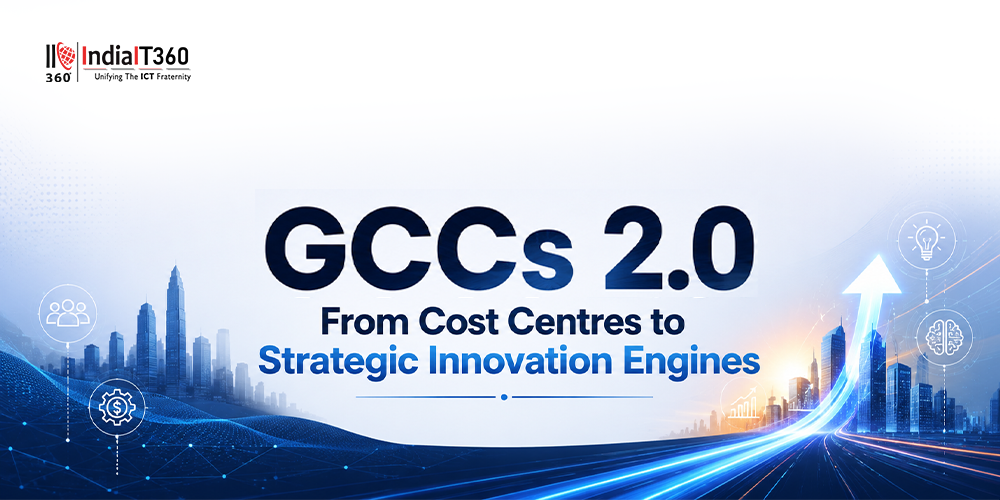
Not too long ago, Global Capability Centres had one clear purpose: deliver efficiency.
Companies built them to optimise costs, streamline operations, and support business functions across geographies. Success was measured through delivery metrics, process excellence, and operational discipline.
That model worked for decades.
But business has changed.
Technology cycles have shortened. Customer expectations have accelerated. Innovation has become a boardroom conversation. And in response, Global Capability Centres have quietly transformed into something far more influential.
Today’s Global Capability Centres (GCCs) are not sitting behind the business.
They are helping define where the business goes next.
Across India, GCCs are evolving into centres of product ownership, digital transformation, enterprise strategy, and innovation-led growth. The conversation is no longer about reducing costs.
It is about creating value.
The Reinvention of the GCC Model
One of the biggest shifts in modern business has been the decentralisation of innovation.
Organisations no longer believe that breakthrough thinking has to originate from one headquarters or one geography. Instead, they are building connected ecosystems where decisions, experimentation, and execution happen simultaneously across markets.
That shift has elevated the role of Global Capability Centres in India.
Today’s GCC teams influence areas that were traditionally controlled by global headquarters:
• Product development
• Cloud and infrastructure decisions
• Cybersecurity strategy
• Customer experience transformation
• Data and analytics programmes
• Technology roadmaps
• Business intelligence initiatives
Interesting fact:
India’s GCC ecosystem has moved so rapidly that many multinational organisations now use India not only as an operating location but as a testing ground for business innovation itself.
That change says something powerful.
Businesses do not place innovation where they save money.
They place innovation where they see capability.
India’s GCC Advantage Is No Longer About Cost
India’s leadership in the GCC landscape is entering a new phase.
For years, cost efficiency dominated the narrative. Today, organisations are choosing India because of something more valuable: access to skilled talent, digital maturity, engineering strength, and leadership capability.
That evolution is creating a stronger and more influential GCC ecosystem.
Companies are building teams here that own outcomes, not activities.
-
Some are developing enterprise platforms.
-
Others are designing customer experiences.
-
Many are driving strategic business transformation.
Increasingly, India’s GCCs are becoming environments where ideas move faster and execution scales quicker.
And that is changing the global perception of what a capability centre can be.
From Execution Centres to Innovation Engines
If the first generation of GCCs focused on support, GCC 2.0 is focused on ownership.
The new success indicators are changing.
Instead of asking: “How efficiently are we operating?”
Leaders are asking: “How much business impact are we creating?”
Today’s high-performing GCCs are measured through:
• Innovation outcomes
• Revenue contribution
• Product influence
• Technology leadership
• Speed to market
• Business resilience
This is exactly why GCCs transforming from cost centres to innovation engines has become one of the defining business transitions of this decade.
Why This Shift Matters More Than Ever
This transformation extends beyond organisational design.
It changes careers.
It changes leadership structures.
And it changes how value is created.
Engineers become product owners.
Operations professionals influence business strategy.
Technology teams contribute directly to enterprise outcomes.
For young professionals entering the workforce, GCCs today offer something entirely different from what they represented a decade ago.
Not support roles but Business influence.
That shift may become one of India’s strongest competitive advantages in the years ahead.
India’s Next Opportunity Is Already Taking Shape
IndiaIT360 explored this transition earlier in its article: GCCs in India: From Support Hubs to Global Innovation Engines https://indiait360.com/article/gccs-in-india-from-support-hubs-to-global-innovation-engines. That article looked at how GCCs evolved beyond support functions.
This next chapter goes further.
Today, GCCs are becoming strategic growth centres with measurable influence on enterprise outcomes. The organisations that succeed tomorrow may not necessarily be the ones with the largest headquarters. They may be the ones who build the strongest innovation ecosystems. And increasingly, those ecosystems are being built through enterprise innovation, powered by digital transformation, and led by India’s next generation of Global Capability Centres. Because GCC 2.0 is not about doing more work. It is about creating more impact.

 Parul Bhati

eBook
Tech Titans Speak




































Poll of the Week
What’s your biggest challenge in scaling your SaaS platform?
Which VDI platform do you currently use or prefer using?
What is driving your organization to reconsider its VDI strategy today?
What would help you grow your business faster as a channel partner?
How ready is your payments ecosystem for AI-driven automation?
What matters most in your cloud journey?
What's your biggest IT headache?
How do you prefer to stay updated on emerging tech trends?
Which breakthrough technology would most elevate your endpoint security?

Ad
Teaser of the Week