Ad


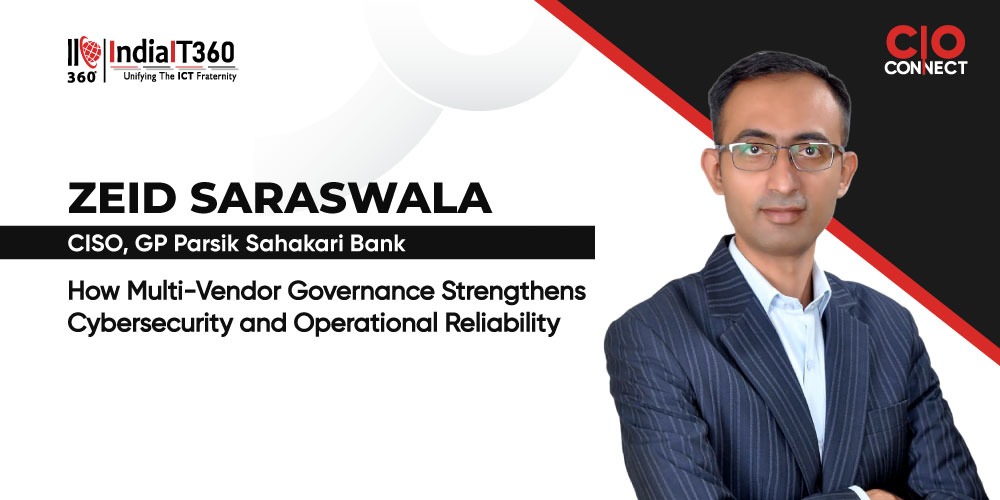
How Multi-Vendor Governance Strengthens Cybersecurity and Operational Reliability
-
 Team IndiaIT360
- 27-Dec-2025
- 1125 Views
Today’s enterprises operate in a highly interconnected digital environment, relying on multiple third-party vendors for cloud infrastructure, applications, cybersecurity tools, and managed services. While this multi-vendor model enables agility and access to specialized expertise, it also increases cyber, operational, and compliance risks if not governed effectively. Multi-vendor governance has therefore become a strategic necessity rather than a compliance formality.
Multi-vendor governance provides a structured framework to manage diverse vendors under a unified oversight model. Instead of treating vendor relationships in isolation, it establishes common policies, performance metrics, and risk management practices across the ecosystem. This holistic approach improves visibility, consistency, and accountability—especially for critical and material outsourced services.
Reducing Concentration Risk and Single Points of Failure
Over-reliance on a single vendor for multiple critical services creates systemic vulnerabilities. A cyber incident, service outage, or financial failure at one provider can quickly cascade across operations. Multi-vendor governance mitigates this risk by promoting diversification, defining clear segregation of duties, and establishing alternate support and failover arrangements. This significantly enhances resilience and minimizes business disruption during adverse events.
Strengthening Cybersecurity Through Standardization
Third-party environments are among the most common sources of cyber risk. Vendors often operate with varying levels of security maturity, creating gaps that attackers can exploit. A robust governance framework enforces consistent cybersecurity standards across all vendors—covering access controls, data protection, vulnerability management, logging, monitoring, and incident reporting timelines. Regular security assessments and compliance reviews ensure alignment with internal policies and regulatory expectations, while clearly defined responsibilities strengthen shared accountability.
Improving Incident Response and Coordination
Cyber and operational incidents rarely respect organizational boundaries. When multiple vendors are involved, unclear ownership and fragmented communication can delay resolution and increase impact. Multi-vendor governance defines escalation paths, communication protocols, and joint response procedures, enabling faster detection, coordinated action, and transparent reporting. This structured approach is critical for maintaining customer trust and meeting regulatory incident-reporting requirements.
Enhancing Operational Reliability and Service Quality
Operational failures often stem from coordination breakdowns rather than technology alone. Governance improves reliability by aligning vendors through clearly defined SLAs, KPIs, and end-to-end performance metrics. Continuous monitoring, periodic governance reviews, and joint testing exercises—such as disaster recovery and failover drills—ensure that resilience is validated in practice, not just documented.
Turning Vendors into Strategic Enablers
Effective multi-vendor governance goes beyond risk mitigation. It transforms vendor relationships into strategic partnerships built on transparency, accountability, and shared objectives. Centralized oversight enables better performance benchmarking, cost optimization, and informed decisions on vendor renewal or consolidation.
Conclusion
In an era of persistent cyber threats and heightened regulatory scrutiny, strong multi-vendor governance is a cornerstone of sustainable digital operations. By reducing concentration risk, strengthening cybersecurity, and improving operational reliability, it turns complex vendor ecosystems into resilient and trusted enablers of business growth.
Article written by Mr. Zeid Saraswala, Chief Information Security Officer at GP Parsik Sahakari Bank.


 Suraj Kumar

eBook
Tech Titans Speak




























Poll of the Week
Which VDI platform do you currently use or prefer using?
What is driving your organization to reconsider its VDI strategy today?
What would help you grow your business faster as a channel partner?
How ready is your payments ecosystem for AI-driven automation?
What matters most in your cloud journey?
What's your biggest IT headache?
How do you prefer to stay updated on emerging tech trends?
Which breakthrough technology would most elevate your endpoint security?

Ad

Ad
Teaser of the Week