Ad


CIO Perspectives: Human vs AI Decision-Making — Where Do You Draw the Line?
-
 Team IndiaIT360
- 27-Apr-2026
- 37 Views
As enterprises accelerate toward AI-led transformation, one question continues to define the future of leadership:
Human vs AI decision-making—where do you draw the line?
The answer isn’t simple—and as leading CIOs across industries reveal, it’s not meant to be. The future lies not in choosing between humans and AI, but in designing a balanced, responsible, and purpose-driven collaboration.
A Practical Framework for Decision-Making
Some leaders define this balance through clear operating principles.

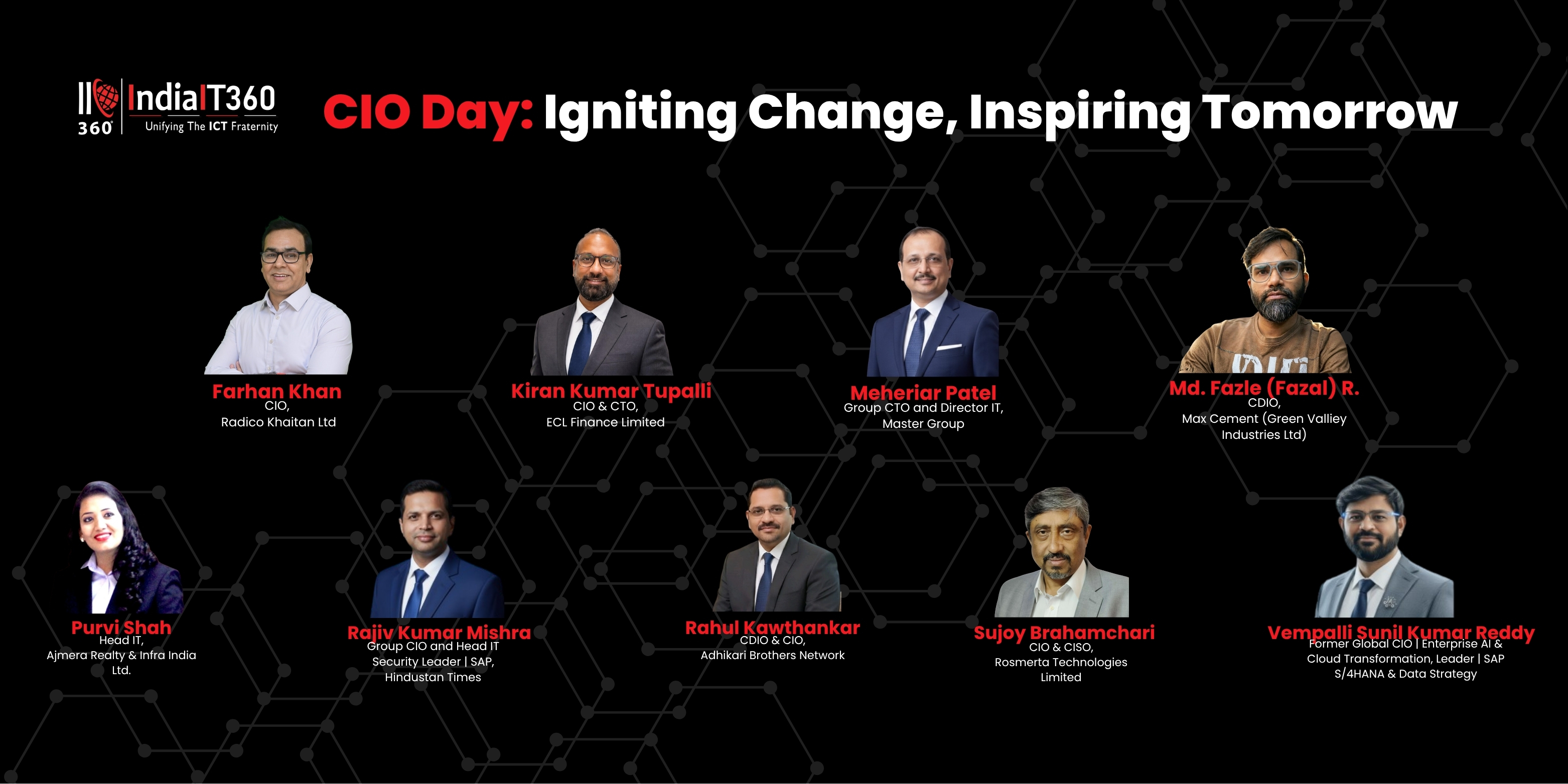
Farhan Khan
CIO, Radico Khaitan
AI leads where decisions are data-rich, repeatable, and time-sensitive (forecasting, optimization).
Humans lead where decisions are high-impact, ambiguous, or value-driven (strategy, ethics, brand risk).
Operating principle: AI recommends, humans remain accountable.
Success for me as a CIO means : Success for me as a CIO means translating technology into measurable business outcomes. A successful CIO is not defined by technology deployed, but by business value realized, speed of decisions improved, and the organization’s readiness for the future.
The Evolving Role of the CIO
The CIO role itself is undergoing a fundamental shift—from operator to strategist.

Kiran Kumar Tupalli
CIO and CTO, ECL Finance Limited
The CIO who merely keeps the lights on has already fallen behind. In three decades I have learned that technology doesn’t transform businesses — leaders who are unafraid to reimagine their own role do. The best CIOs I know stopped being custodians of infrastructure and became architects of possibility.
The CIO role has evolved from back-office guardian to boardroom strategist. To stay relevant, today’s CIO must balance bold innovation with ironclad governance — championing AI and data-driven transformation while embedding security and compliance into every decision. The modern CIO doesn’t just enable the business; they co-author its future.
AI as an Enabler, Not a Replacement
Across organizations, AI is proving its strength in speed, scale, and pattern recognition. But when it comes to judgment, ethics, and accountability, the human role remains irreplaceable.

Meheriar Patel
Group Chief Technology Officer and Director IT, Master Group
AI should inform decisions, not own them. I draw the line where judgment, ethics, accountability, and context comes into play. AI excels at speed, scale, and pattern recognition—but when decisions impact people, strategy, or risk, human leadership must remain accountable. The future isn’t human vs AI, it’s humans with AI. Well chartered augmented intelligence with controls on ethics and guided by responsible leadership.
Success for me as a CIO means creating a strong partnership between people, process and AI.This is where technology amplifies human judgement, not replaces it, creating a strong bonding between human intelligence, conversion in automation and innovation to mankind covering all walks of life.
AI: A Brilliant Researcher, Not a Leader
Some leaders describe AI as highly capable—but not yet capable of ownership.

Md Fazle Rehman
CIDO, Max Cement (Green Valliey Industries Ltd)
Human vs AI decision-making, where do you draw the line: I look at AI as a brilliant researcher, but a poor leader. We hand over the keys to AI when the job is about speed, massive data, and finding patterns no human eye could catch. But I draw the line at anything that requires a heartbeat: context, ethics, and the messy reality of human emotions. AI can give me the 'what' and the 'how' with incredible precision, but it has no idea 'why' we do what we do.
In short : AI can process the data, but only a human can feel the responsibility.
AI as Compass, Humans as Navigator
The relationship between AI and humans is best understood as complementary.

Purvi Shah
Head IT, Ajmera Realty & Infra India Ltd.
AI is the compass and humans are the navigator. In real estate, where every decision carries emotional, financial, and social weight, I believe AI should illuminate the path surfacing data, patterns, and possibilities, while human wisdom steers the direction. The line I draw is at ownership. Algorithms can predict, they cannot empathise, own outcomes, or carry responsibility. As CIOs, our role is to build organisations that harness AI's power without surrendering human judgement. The future belongs to leaders who know when to trust the data and when to trust themselves.
Driving Business Value Through Technology
For CIOs, success is increasingly defined by measurable business outcomes.

Rajiv Kumar Mishra
CIO and Head IT Security, Hindustan Times
Success as CIO of HT Media means driving digital revenue across Mint and Hindustan through scalable platforms for subscriptions and advertising. It requires always-on, resilient newsroom systems to protect credibility. Leveraging GenAI enhances content, personalization, and ad efficiency. Delivering seamless audience experiences across channels strengthens engagement and loyalty. Unified data platforms enable smarter insights and monetization. Strong cybersecurity ensures trust and safeguards assets. Optimizing costs while reinvesting in AI, cloud, and automation drives ROI. A cloud-first, agile architecture accelerates innovation, supported by a business-aligned IT culture focused on measurable outcomes.
The Future: Human with AI, Guided by Purpose
Rather than competition, the future is about collaboration—with clear boundaries.

Rahul Kawthankar
Chief Information Officer and CISO (Group Head - IT), Sri Adhikari Brothers Network
The future isn’t Human vs AI - it’s Human with AI, guided by purpose. I see AI as an amplifier of intelligence, not a replacement for judgment. It can process data at scale, but it cannot understand meaning, values, or consequences the way humans do. I draw the line where decisions shape trust, culture, and long-term impact, those must remain human-led. As CIOs, our responsibility is not just to adopt AI, but to govern it with clarity and conscience. True leadership lies in knowing when to rely on algorithms, and when to rise above them.
Balancing Logic with Empathy
AI brings logic and efficiency—but human qualities remain essential.

Sujoy Brahamchari
CIO & CISO, Rosmerta Technologies Limited.
Human and AI decision-making should work together, not compete. AI is very good at handling large data, finding patterns, and giving quick, logical suggestions. Humans, on the other hand, bring emotions, ethics, experience, and understanding of context. The line should be drawn where decisions impact people’s lives, values, or fairness—humans must take the final call. AI can support, but not replace human judgment in such cases. For routine, data-driven tasks, AI can lead. In short, use AI for efficiency and humans for responsibility, empathy, and critical thinking to ensure balanced and trustworthy decisions.
Human Judgment: The Ultimate Algorithm
For many CIOs, AI is powerful—but incomplete without human oversight.

Vempalli Sunil Kumar Reddy
Formar Global CIO | Enterprise AI & Cloud Transformation Leader | SAP S/4HANA & Data Strategy, TCS
Technology is most powerful when it serves humanity — not replaces it.
AI can optimize. Humans must decide.
The most important algorithm a CIO runs is judgment.
Success for me as a CIO means every person in the organization feels empowered — not disrupted — by technology.
Conclusion: The Rise of Augmented Leadership
The collective voice of today’s CIOs is clear:
- AI is powerful—but not autonomous
- Humans are essential—not replaceable
- Leadership is evolving—not disappearing
The future belongs to organizations that embrace augmented intelligence, where:
- AI drives efficiency
- Humans drive responsibility
- CIOs ensure the balance between the two

 Team IndiaIT360

eBook
Tech Titans Speak













Poll of the Week
Which VDI platform do you currently use or prefer using?
What is driving your organization to reconsider its VDI strategy today?
What would help you grow your business faster as a channel partner?
How ready is your payments ecosystem for AI-driven automation?
What matters most in your cloud journey?
What's your biggest IT headache?
How do you prefer to stay updated on emerging tech trends?
Which breakthrough technology would most elevate your endpoint security?

Ad

Ad
Teaser of the Week